

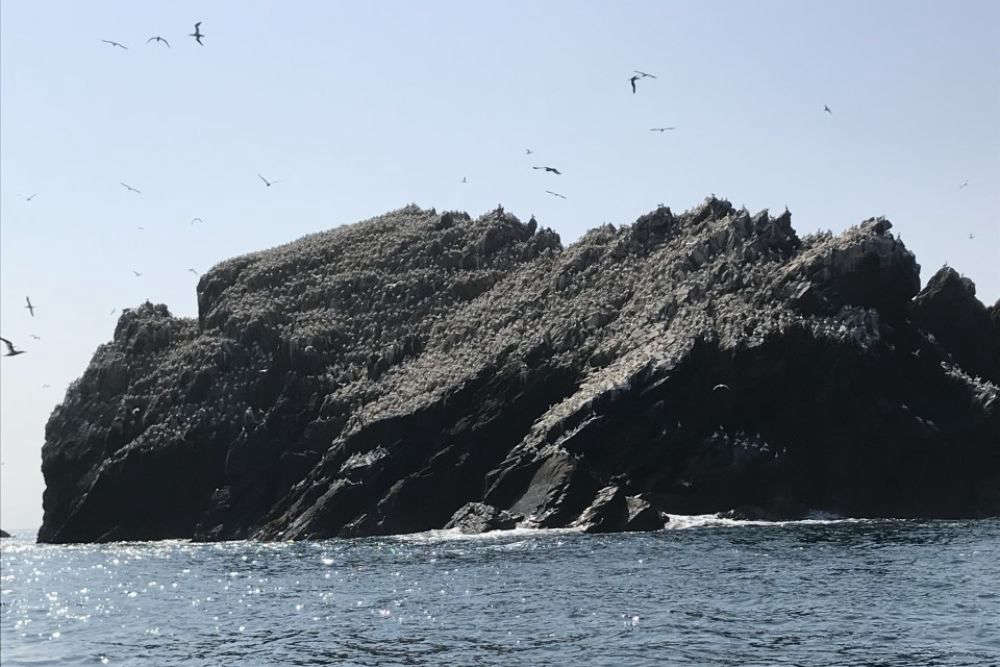
The Alderney Wildlife Trust estimates 4% of Gannet chicks have died of the disease, which has also been confirmed at a farm in Jersey.
Avian flu has been steadily spreading south since the spring and now it's confirmed among Alderney's Gannets, one of the largest single populations in Europe.
Monitoring by the Alderney Wildlife Trust suggests 4% of chicks have died and holes in the colony are appearing. Normally the rocks just off the west coast of the island are densely populated.
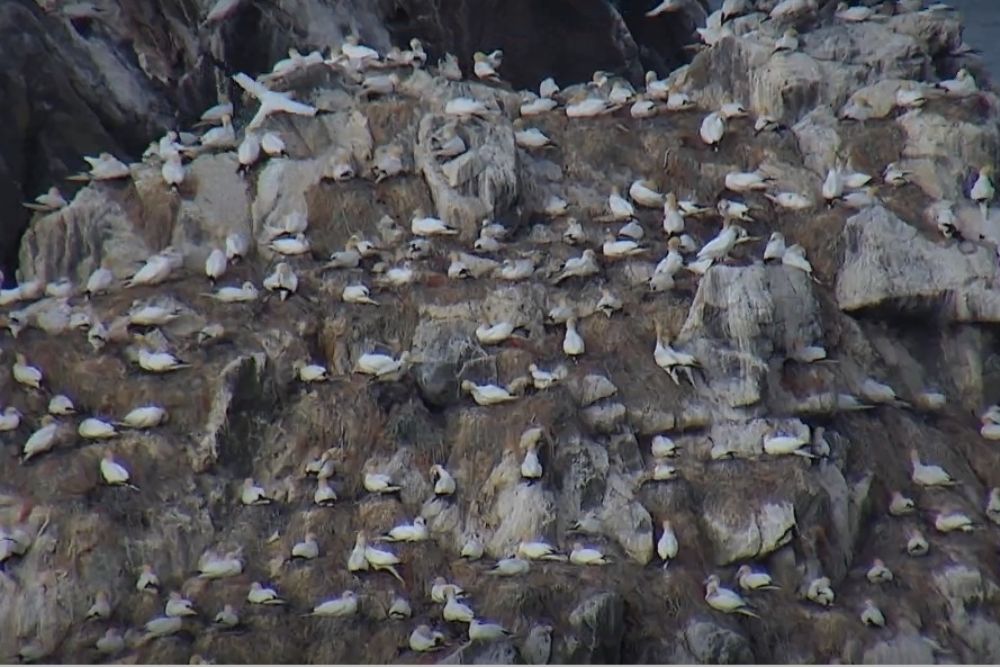
The disease has spread inland, and an Alderney smallholder's chickens had to be put down yesterday (16 August).
In Jersey, a suspected outbreak at a farm in St Peter reported earlier this week has been confirmed as Avian Influenza.
32 birds were found dead.
The rest of the flock -18 more birds - have been culled. Feral chickens in the nearby St Peter's Valley will also be destroyed.
A 3km protection zone is being put in place from midnight tonight, legally requiring keepers to house their birds and keep them separate from wild birds.
Volunteers in Alderney have been picking up dead or dying seabirds which have to be disposed of quickly to avoid contamination.
Anyone with domestic birds in the islands is being advised to shield them against wild birds.
Anyone spotting sick or dying gulls or other birds needs to report them to the States of their respective islands.
People are also being told not to feed seabirds like gulls, as the chance of spreading the disease is higher when they mass together.
This strain of Avian flu can spread to humans, but is not considered serious.
 WATCH: Car 'sails' from Guernsey to Sark
 Guernsey donates to Nepali disaster relief effort
 Memorial service for sailors who perished off Guernsey's west coast
 "Catastrophic" engine failure stops Channel Island ferry
 Popular Guernsey swimming pool could re-open within days
 Fog causes major disruption at Guernsey Airport
 Sark chef creates astronomy app
 More women cycling in Guernsey after confidence booster classes